Garage Door Unstable Cables: Warning Signs, Causes and Safe Repair Options
Garage door unstable cables can cause the door to move unevenly, become stuck, come off its tracks, or drop unexpectedly. If one cable becomes loose, damaged, or loses tension, the weight of the garage door may no longer be distributed evenly between both sides.
This is more than a minor operating problem. Garage door cables work alongside the spring system to raise and lower a heavy door safely. Continuing to operate a door with unstable cables can damage the tracks, rollers, cable drums, springs, panels, and garage door opener.
If your garage door looks crooked, shakes while moving, or has a cable hanging loosely beside it, stop using the door and arrange a professional inspection.
What Do Garage Door Cables Do?
Garage door cables are strong steel wires connected to the lower section of the door. They run vertically along each side of the opening and wind around cable drums located above the door.
As the garage door opens or closes, the cables help transfer the spring tension and keep both sides of the door moving at the same speed. A typical sectional garage door uses one lifting cable on each side. If one cable becomes loose or breaks, the other side may be forced to carry more of the door’s weight.
The cables may look small compared with the door, but they are an essential part of its lifting and balancing system.
What Are Unstable Garage Door Cables?
An unstable garage door cable is any cable that is no longer maintaining the correct and consistent tension. The cable may be:
- Loose or sagging
- Tighter on one side than the other
- Frayed, rusted, or damaged
- Slipping across the cable drum
- Winding incorrectly around the drum
- Rubbing against the track or door frame
- Partially disconnected from the bottom bracket
- Completely off the drum
- Snapped or hanging beside the door
Cable instability may begin as a small amount of slack, but it can quickly develop into a more serious problem once the door is operated.
Warning Signs of Unstable Garage Door Cables
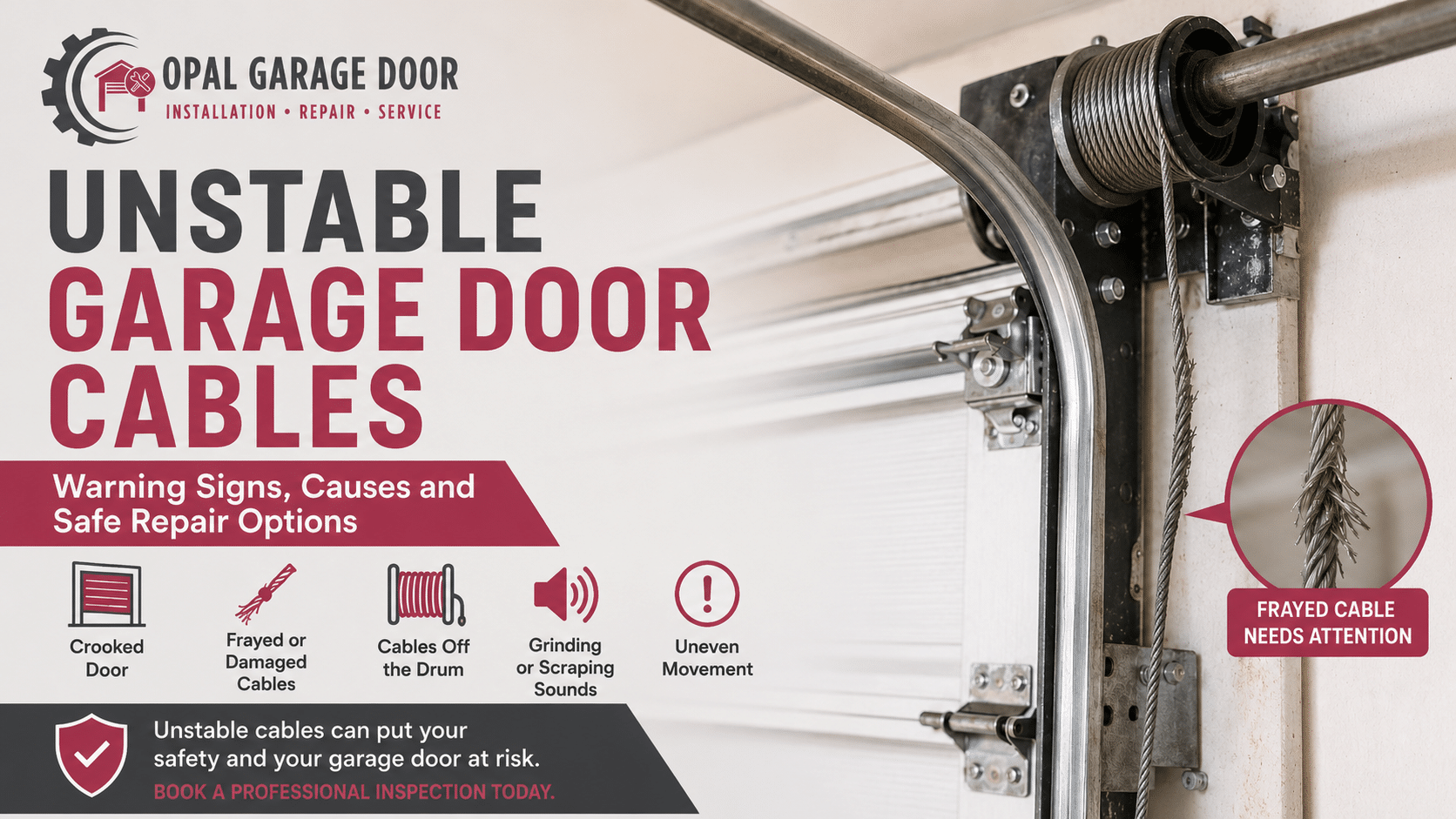
The Garage Door Looks Crooked
One of the most common signs is a garage door that sits lower on one side. This usually means the cables are carrying unequal tension or one cable has slipped from its correct position.
The Door Shakes or Jerks
A properly balanced garage door should travel smoothly. Shaking, jerking, or sudden movements can indicate that one cable is tightening and releasing inconsistently.
A Cable Is Hanging Loose
A cable hanging beside the track may have come off the cable drum, become disconnected, or snapped. Do not pull, cut, or attempt to rewind it.
The Door Stops Partway
Cable instability can cause the door to bind inside the tracks. The garage door opener may stop because it cannot move the uneven weight safely.
The Door Makes Scraping or Grinding Sounds
A loose cable may rub against the track, bracket, drum, or door panel. Grinding can also occur when a cable overlaps incorrectly on the drum.
The Garage Door Opens Unevenly
One side may rise before the other, causing the door to twist. Uneven movement is an important warning that the cable or spring system requires attention.
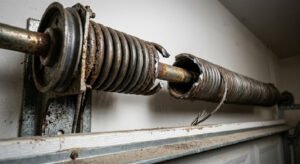
The Cable Is Frayed or Rusted
Visible broken strands, rough sections, corrosion, or “shaggy” areas are signs that the cable is deteriorating and may be close to failure.
What Causes Garage Door Cables to Become Unstable?
Incorrect Cable Tension
Both cables must have balanced tension. If one side is tighter or looser, the door can rise unevenly and place additional pressure on the tracks and rollers.
A Broken or Weak Spring
Garage door cables and springs work as one system. When a spring breaks or loses tension, the cables may become loose, unwind incorrectly, or come off the drums.
The Door Has Hit an Obstruction
If the garage door closes onto a vehicle, storage box, tool, or other object, one side may stop while the other continues moving. This can create cable slack and cause the cable to leave its drum.
Worn Cable Drums
Cable drums contain grooves that guide the cables as they wind and unwind. A worn, damaged, loose, or incorrectly positioned drum can prevent the cable from tracking correctly.
Damaged Rollers or Tracks
Bent tracks, seized rollers, or loose brackets can make one side of the door move differently from the other. The resulting imbalance can affect cable tension.
Corrosion and General Wear
Garage door cables are exposed to moisture, dirt, friction, and repeated movement. Over time, the steel strands may weaken, rust, or fray.
Previous Incorrect Repairs
Incorrect cable installation or improper spring adjustment can leave the system unbalanced. Simply placing a cable back onto the drum without correcting the original cause may result in the problem returning.
Is It Safe to Use a Garage Door With Loose Cables?
No. A garage door with loose, unstable, or damaged cables should not be operated.
The door may appear to work temporarily, but the cable can slip further, the door may become jammed, or one side may drop. A broken cable can also place excessive pressure on the remaining cable, springs, tracks, and opener.
A garage door cable failure can cause the door to fall suddenly, creating a risk of injury and property damage.
Until the door has been inspected:
- Keep children and pets away from the area.
- Do not stand underneath the garage door.
- Do not repeatedly press the remote.
- Do not attempt to lift or force the door manually.
- Do not touch the springs, drums, cables, or bottom brackets.
- Avoid parking a vehicle directly underneath the door.
Can You Repair Garage Door Cables Yourself?
Garage door cable repairs should generally be completed by a trained garage door technician.
The cables are connected to a spring-loaded system that can hold significant tension. Removing brackets, loosening cable drums, adjusting springs, or attempting to rewind a cable without the correct equipment and knowledge can cause the cable or spring components to release suddenly.
A professional repair involves more than putting the cable back into position. The technician should identify why the cable became unstable and inspect the complete lifting system.
How Garage Door Cable Problems Are Diagnosed
During an inspection, a garage door technician may check:
- The condition of both lifting cables
- Cable tension on the left and right sides
- Cable drum alignment and condition
- Torsion or extension spring performance
- Bottom brackets and cable attachment points
- Track alignment
- Roller condition
- Bearings, brackets, and fasteners
- Garage door balance
- Garage door opener operation
- Damage to the door panels
The correct repair will depend on whether the cable is loose, incorrectly wound, frayed, disconnected, or broken.
Garage Door Cable Repair or Replacement
A cable that has simply come off the drum may sometimes be reset after the underlying cause has been corrected. However, a cable should usually be replaced when it has:
- Frayed steel strands
- Significant rust or corrosion
- Kinks, flattening, or other deformation
- Damage near the cable loop or connection
- Excessive wear
- Snapped completely
In many cases, replacing both cables at the same time can help maintain balanced performance because both sides have usually completed a similar number of operating cycles.
After completing the repair, the technician should test the door through several opening and closing cycles and confirm that both sides remain level.
What Happens if Unstable Cables Are Ignored?
Delaying garage door cable repairs can lead to:
- A crooked or jammed garage door
- A cable coming completely off the drum
- Damage to the cable drums
- Bent or damaged tracks
- Broken rollers or hinges
- Excessive spring wear
- Damage to the garage door opener
- Twisted or damaged door panels
- The door becoming stuck open or closed
- Sudden cable failure
Early repairs are generally simpler than repairing the wider damage caused by repeatedly operating an unbalanced door.
How to Reduce the Risk of Cable Problems
Garage door cables should be visually inspected as part of regular garage door servicing. Homeowners should look for obvious signs of fraying, rust, loose cables, uneven movement, or unusual sounds without touching or adjusting the components.
Regular professional servicing can identify developing cable, spring, roller, and track problems before they result in a complete breakdown.
Avoid closing the garage door onto objects and do not keep operating it when it begins moving unevenly. Stopping early may prevent the cable from leaving the drum or causing damage to other components.
Garage Door Cable Repairs in Sydney
Opal Garage Doors provides professional garage door cable repairs and replacements across Sydney. We inspect the complete lifting system to identify the cause of unstable cables rather than addressing only the visible symptom.
Our garage door technicians can assist with:
- Loose garage door cables
- Frayed or snapped cables
- Cables that have come off the drum
- Uneven or crooked garage doors
- Cable drum problems
- Garage door spring faults
- Track and roller issues
- Garage doors that are stuck open or closed
- Emergency garage door repairs
We focus on restoring safe, smooth, and properly balanced garage door operation using practical repair methods and suitable replacement components.
Book a Garage Door Cable Inspection
Unstable garage door cables should not be ignored. If your garage door is crooked, shaking, making unusual sounds, or showing loose or frayed cables, stop operating it and arrange an inspection.
Contact Opal Garage Doors for reliable garage door cable repair in Sydney. Our technicians can diagnose the problem, explain the required repair, and restore the safe operation of your garage door.
Frequently Asked Questions
Why is one garage door cable loose?
One cable may become loose because the door is unbalanced, a spring has lost tension, the cable has slipped from its drum, or one side of the door has encountered an obstruction.
Can I open my garage door with a broken cable?
You should not operate a garage door with a broken cable. The door may move unevenly, become stuck, or drop unexpectedly.
Why does my garage door sit lower on one side?
A garage door that is lower on one side may have uneven cable tension, a cable off the drum, a damaged spring, a seized roller, or a track-alignment problem.
Should both garage door cables be replaced together?
It may be advisable when both cables are the same age and have experienced similar use. A technician should inspect their condition and recommend the safest repair.
How do I know whether my garage door cable is frayed?
Look for visible broken steel strands, rough or fuzzy sections, rust, flattening, kinks, or areas where the cable appears thinner. Do not touch or pull the cable.
Can a garage door opener cause a cable to come loose?
The opener is not usually the original cause. However, repeatedly operating an unbalanced or obstructed door can worsen an existing cable, spring, track, or drum problem.
Is a loose garage door cable an emergency?
It should be treated as an urgent safety issue, particularly when the door is crooked, stuck open, hanging unevenly, or positioned above a person or vehicle.